
Others

What is the cost of conflict in the workplace?

Is your workplace often the center of conflict? Workplace conflict is unavoidable and more often, many workplace conflicts can seriously undermine organisations culture, employee relationships and overall quality of work. 

According to research from occupational health provider Health Assured, nearly 9 out of 10 (86%) workers regularly vent their anger and frustration at their co-workers. Conflict in the workplace caused by anger and frustration is more common than most people might think.

CIPD (Chartered Institute of Personnel and Development) found that “under half of employees (44%) experiencing conflict report that the conflict or difficult relationship has so far been fully or largely resolved.”

Conflict at workplace negatively affects our: 
  • Productivity and performance
  • Motivation
  • Commitment
  • Anxiety levels 
  • Mental health
  • Stress levels
  • Concentration levels
  • Engagement levels 


What happens when toxic behaviour and conflict issues moves online while working from home? 

Managers are often the first people to go to for issues of workplace conflict but toxic work environments are often created and exacerbated through leaders abusing their power. This can become an underlying cause of conflict and stress and if that’s the case, speaking with other supervisors you work with or escalating the issue to HR may be a better move. 

Manager expectations play a large role in setting work-life boundaries. A leader can create a toxic environment if they demand employees be online and available beyond agreed-upon working hours, like late into the evening or on weekends. Managers may also expect more from workers who no longer have to spend time commuting. 

Coronavirus: Asia not yet ready to work from home, SE Asia News & Top Stories - The Straits Times


While employee surveys can raise awareness of poor organisational culture, it’s ultimately up to senior leaders to heed their employees concerns and actually do something to improve on the issue. Managers should let workers take control of their time, West Duffy says. Leaders can communicate clear, reasonable expectations of when employees should be available, and they should also be careful about how and when they communicate these guidelines.

Working with people is the principle work that managers do, and it is the people component that generates the stress and can lead to burn-out syndrome, says Tim Taylor, director of leadership development firm Making Great Leaders. He explains: “The reaction may often be depersonalise, so that individuals in their team become ‘them’. They may approach the problem in an unfeeling or even callous manner. Then the blaming starts and conflict rises, a type of conflict that is destructive and unhealthy because it is emotionally confusing.”

” Stress in the workplace has serious consequences for the welfare of employees and ultimately for overall business, as research has shown clear links between stress, low productivity and staff retention rates.”


In order to deal with workplace conflict more effectively, managers have to acknowledge and recognise that the value they bring to the business is in their dealings with people. They also need to develop their self-awareness about the triggers and behaviour patterns that lead them to that first state of being emotionally over-extended. People that are taking longer to complete routine tasks, producing lower quality work, and strained working relationships between employees, are all signs of a workforce under pressure, and potentially affected by stress. 

In recognising or anticipating signs of elevated levels of stress, managers should encourage staff to talk openly about stress and conflict, and the challenges and barriers that exist within teams and outside them. These conversations should be constructive, work to share experiences, explore improvements that alleviate unnecessary stress that will bring everyone closer to achieving their goals. 

Personality clashes and stressful work environments can have a negative effect on personal well-being and emotional health, so perhaps a more worrying research finding was that 79% of employers admitted they found it difficult to deal with staff who struggle to control their temper. 

Conflict resolution conversations facilitated by a team leader will uncover problems and result in finding positive solutions. It is constructive to listen and acknowledge opposing ideas and points of view.

Stress management courses and certification are available on managing stress and wellbeing in the workplace that will equip managers with the tools they need to be comfortable in having open conversations with their team members. This will help leaders and managers to create a more harmonious and therefore less stressful work environment. 

“Emotionally, it’s healthier to put more energy focusing on yourself. As soon as we put energy into focusing on others, I think we lose, because we ultimately can’t control what they do.”

Read More
Others

Why Is It So Difficult For Leaders To Give Positive Feedback?

“Which is easier, giving positive feedback or negative?” The majority indicated that it was much easier to deliver positive feedback. One participant commented, “It’s not difficult to tell someone they are doing a good job but it’s much harder to say, ‘You messed up!’”


Joe Folkman and Jack Zenger (founders and thought leaders of two leadership development firms) created a self-assessment that measured a leader’s preference for giving or avoiding the two basic kinds of feedback. Positive feedback is defined as praise and reinforcement. Negative feedback is corrective and points out errors or missed opportunities.

For this study, they gathered a global sample of 8,671 leaders. The self-assessment reveals that 56% of the leaders had a stronger preference for giving negative feedback, 31% preferred giving positive feedback, and 12 were equal in their preference. These results stimulated the question, “Why do leaders prefer giving negative feedback despite describing it as more difficult to give than positive feedback?”

Attitudes And Assumptions

We then asked if the best managers are those who deliver more praise and recognition than negative feedback. Only 33% of leaders who preferred giving negative feedback agreed with the statement, compared to 77% of those that preferred giving positive feedback:

Many leaders assume that the most effective leaders are those that give people the tough, difficult feedback, while those who lavish praise and recognition are weak and ineffective leaders. Are managers who give more negative feedback than positive really the best managers?

To test this assumption, we combined the results from the self-assessment of feedback preferences report with 360-degree evaluations from managers, peers, direct reports, and others around their perceptions of a leader’s effectiveness.  The outcome measure we looked at was the overall leadership effectiveness rating, which combines results from competencies that predict leadership success.

Combining the databases, Leaders who prefer to give negative feedback had an overall effectiveness rating at the 35th percentile, while those who prefer to give positive feedback were at the 47th percentile. We performed a t-test and determined the difference between the two groups was highly statistically significant (t value = 3.395, Sig. 0.001).

It turns out the best leaders are those that prefer to give positive feedback.

Why are managers who give more negative feedback rated so poorly?

The data Joe Folkman and Jack Zenger collected indicates that when leaders prefer giving negative feedback, it conveys a lack of confidence in their colleagues and a primary focus on what employees might do wrong. These managers are perceived as quick to criticise and very slow to praise. This impacts relationships, trust, and integrity, and indicates that the manager does not have others’ best interest at heart.

Why do some people find it difficult to give positive feedback?

Many leaders are  receiving positive feedback, which can result in them not giving positive feedback to others. Many leaders, feel that the negative feedback will be more helpful. However, 71% of people say that they appreciate recognition and praise for a job well done. Many leaders fail to recognise the power of positive feedback and its benefit in motivating others. One concern is that if a leader provides too much positive feedback, the negative feedback will be ignored when delivered. However, research shows that leaders who have a strong preference for giving positive feedback are rated significantly higher on their ability to “Provide honest feedback in a helpful way.”

In fact, 92% of 8,542 respondents agree that “Negative feedback, if delivered appropriately, is effective at improving performance.

leadercommunicator Blog | The Grossman Group | David Grossman

Factors that increase the amount of positive feedback

Looking at Zenger Folkman’s datasets, I discovered four behaviors that enabled leaders to provide more positive feedback.  Improvement of a few of these behaviors will help increase your ability to provide positive feedback.

1. Leaders who are interested in their own development tend to give more positive feedback to others. They have an improve mentality where they believe that because they can improve, others can as well. Leaders who are concerned about their own development tend to ask for feedback and are always open to ideas and suggestions.

2. Consideration for Others. There is a strong correlation between leaders who have a high concern for others and their effectiveness at giving positive feedback. When a leader is focused on negative feedback they are more likely to judge and evaluate others. Leaders who show consideration for others show they want the best for them.

3. Desire to Develop Others. Those who give more positive feedback believe that talent and skills are dynamic and are confident that people can grow and learn new skills. They look for and support development activities for others.

4. Strong Desire to Pull more than Push. Most leaders learn first about push motivation: set deadlines, help others be accountable, and push others to accomplish stretch and difficult goals. Those who provide more positive feedback also know how to pull. They get others excited about goals and objectives and inspire others to do more. They recognise others regularly, reward high performance, and are generous with their praise. 

Bottom Line

This set of research data provide compelling evidence that when leaders give more positive feedback than negative, they are perceived as more effective leaders. If you think you have developed a habit of focusing on what people do wrong rather than what they do right, try keeping track.

Continue to identify problems and illuminate weaknesses, but provide more honest praise when things go well, recognise effort, encourage the heart and thank others for their contributions.

If you can make this change, leaders will notice a positive difference in yourself and in others.

Read More
Others

Leading A Team Virtually? 6 Tips To Shorten The Distance

What’s different about virtual team leadership?

There’s lesser interactions and personal contact. There’s no visual data on a subordinate’s work habits, checking in time, including the time they came to work and when they left. This demands a high level of trust that the manager possesses an assumption about the subordinate’s strong work ethic and commitment to meeting the organisation’s objectives. While some jobs have built-in measures of productivity and performance, the great majority have more obscurity.

Virtual leadership requires some comfort with video call platform technology, given that video meetings require the setup and administration of some user-friendly services, such as Zoom, Webex, Microsoft Teams, etc. There is a high requirement for the manager and subordinate to practice excellent communication skills. If either the manager or subordinate is inclined not to share information, it adds a challenge to virtual leadership. There is a premium on being adept at both written and oral communication.

Assessment Ratings Survey

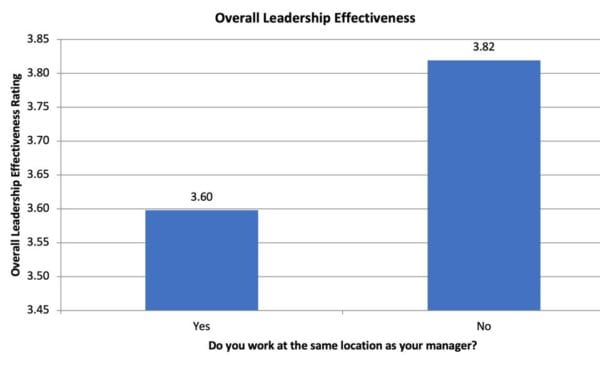
A recent study 360-degree assessment ratings of leaders conducted in an IT function showed that those who worked remotely from their 99 subordinates, leaders of 119 subordinates who worked in the same physical location with their colleagues. We found the results of this study quite insightful. 

Senior management anticipated that the remote employees would be more critical of their managers and less engaged in their work. Ironically, the results in the graph below showed that those who worked remotely gave their leaders significantly higher ratings. The employees of the remote leaders were more engaged in their work than the subordinates of the co-located managers. Some might argue that this merely illustrates the old observation that “absence makes the heart grow fonder,” while we choose to think it is more complicated than that. Comparing the mean scores statistically, we discovered there was a significant difference between the two groups (t-value 2.232, Sig. 0.027).

ZFCO

What the best remote leaders did differently

Leaders who managed remote employees and compared them to those leaders whose leadership effectiveness rating was above the 50th percentile. We wanted to identify behaviours that made the best leaders more productive when working with remote employees. We identified the key skills that enabled leaders to be more successful while comparing the two groups of leaders.

It is important to note that this research was done before the world-wide pandemic of COVID-19. We have combined our research findings with some other current observations to create an up-to-date list of the behaviours that we believe will best describe the most effective virtual leaders. We have focused on what the COVID-19 pandemic has done that should alter management’s and leadership’s more common practices. 

Checklist of Excellent Virtual Leadership Practices

Our conclusions are presented in the form of a checklist. Checklists are valuable reminders of practices that are easy to forget when a person gets busy or complacent. Pilots fly more safely when they use a checklist. Surgeons experience fewer infections when they follow a checklist. This checklist is a series of questions we invite you to ask yourself. Your honest answers will guide you to areas where you might ideally hone your behaviour.

1.     How frequently do you contact your team members? 

At least once or twice a week? Do you assume each person needs slightly different interactions? Do you convey your interest in them personally and how they are doing? Our research shows that the most effective leaders take the initiative, and that begins with reaching out to their colleagues to communicate with them.

Tip: When on a telephone call or video call, remove all distractions. Listeners can sense when you are not focused or not attentive. Be present.

2.     Do your team members feel empowered to suggest and make changes? 

Do they know their decision-making sphere? Do you celebrate their successes? Do they have the necessary equipment and resources for their work? Do you assure them of your confidence in them? Our research confirmed that championing change was a differentiating behaviour.

3.     Are your team members clear about the organisation’s strategy and how their goals link to it?

a.     Tip: Periodically ask them to summarise their understanding of the organisation’s goals, and their line of sight between those goals and their work. One of the most powerful behaviours, according to our research, was the leader’s effectiveness in ensuring that the strategy was clear to all.

4.     Are you comfortable using video conferencing technology?

The new work environment demands familiarity with video conferencing technologies. Meetings are greatly enhanced if the leader is comfortable in using the technology to facilitate interaction. Do you use chat rooms, polls, and breakout sessions? These add vitality and variety to the meetings. Shorter, more frequent meetings are becoming the new norm. Do you use meetings to make decisions, not just to exchange information?  Is everyone involved in the discussions? Our research has confirmed that having in-depth knowledge and experience in the firm’s core technology was also a differentiating behaviour.

Note: Our research has confirmed that having in-depth knowledge and experience in the firm’s core technology was also a differentiating behaviour.

5.     Does your team have confidence in and knowledge of your efforts to represent their interests to the larger organisation? 

If remote colleagues know that they have someone in the firm’s leadership who is their advocate and champion, that leader’s influence rises.  Do you deliberately practice inspiring leadership?  Do you contact team members to personally check-in with them, versus contacting them only when you need something?  Do you ask them for feedback about your leadership behaviour?  Are your energy and enthusiasm contagious?  Leaders inspire in a variety of ways, so find a way to inspire that fits your personality.

Do you practice a “high touch” style of leadership to compensate for the lack of in-person meetings?  Do you express interest in each team member’s development? Do they know your commitment to them to take time for their development?

6.     Do you encourage your team’s collaboration within the larger organisation? 

Do you act as the link to other staff activities or to other operating groups within the firm? Our research shows that the most effective leaders for remote subordinates are more prone to encourage collaboration with the rest of the organisation and show little tolerance for competition within the firm.

Your answers to these questions should immediately point to one or two areas where there is an opportunity to become an even more effective virtual leader in your organisation.

-Joe Folkman (President and Co-Founder of Zenger Folkman)

Read More
APAC-Awards-most-empowering-leadership-training-provider2020
Others

Most Empowering Development Training Provider 2020 by South East Asia Business Awards

Thank You for Trusting Us. 

We are absolutely delighted and honoured to be awarded as the “Most Empowering Leadership Training Provider” in 2020 by South East Asia Business Awards. 

Click here for the full directory listing.  

Thank you for all the years of support and recognition. Our commitment is to continue to deliver internationally validated research and evidence-based practices through our training solutions.

We look forward to empowering more people to succeed in life as we continue on this wonderful journey of learning, growth and inspiration, together with you.

See below for our upcoming leadership workshops. 

The Extraordinary Leader™ Workshop (in-person)
18 September 2020, 9am – 5pm (SGT/GMT+8)
Course Fee: S$898

The Extraordinary Leader™ Workshop (online)
Session 1: 02 November 2020, 7pm – 10pm (SGT/GMT+8)
Session 2: 05 November 2020, 7pm – 10pm (SGT/GMT+8)
Course Fee: S$698

The Extraordinary Coach™ Workshop (in-person)
20 November 2020, 9am – 5pm (SGT/GMT+8)
Course Fee: S$648

Elevating Feedback™ Workshop (online)
Session 1: 15 October 2020, 3pm – 5pm (SGT/GMT+8)
Session 2: 16 October 2020, 3pm – 5pm (SGT/GMT+8)
Course Fee: S$588


10% early bird discount for registration and payment made one month before workshop commencement date. 


Sign-up with a friend to enjoy 15% off!


[qode_button_v2 target=”_self” hover_effect=”” gradient=”no” link=”https://lifeskillsinstitute.sg/register/” text=”Register Now” color=”#ffffff” background_color=”#15487d” hover_background_color=”#196a96″]

[qode_button_v2 target=”_self” hover_effect=”” gradient=”no” link=”https://lifeskillsinstitute.sg/leadership/” text=”Click Here To See All Leadership Programmes” color=”#ffffff” background_color=”#196a96″ hover_background_color=”#15487d”]

Lifeskills Institute is the Master Trainer and Accreditor for award-winning leadership development programme, The Extraordinary Leader™ by Zenger Folkman and DISC & PeopleKeys® by The Institute for Motivational Living, Inc. We are also a global training partner and certified facilitator for The Leadership Challenge® by Kouzes & Posner.

Read More
Others

New Research-Based Resilience Diagnostic Tool and Solutions!

Lifeskills Institute is proud to partner with The Resilience Institute to bring you research-based resilience solutions​ for companies, schools, coaches and individuals! 

With leaders planning the future of their organisations while managing the unexpected challenges from this pandemic, now is the time when resilience is most needed to adapt to this new reality. What is resilience and why is it important? Resilience is the ability to recover from setbacks and adapt to challenging circumstances and is required to thrive and flourish. 

Lifeskills Institute continue to strive to be the trusted authority for life skills, learning, development, accreditation and practice. Our partnership with The Resilience Institute enhances our capabilities to enable people to uncover their strengths and maximise their potential in their personal lives and careers.

What is the Resilience Diagnostic App? 

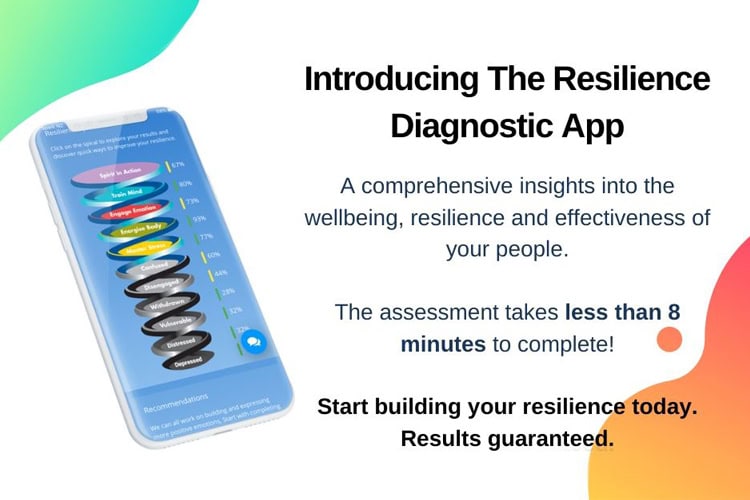
The Resilience Diagnostic app is an integrated solution for mental health, resilience, wellbeing, effectiveness and high performance that can be scaled on-demand. The Resilience App provides employees with a personalised resilience action plan, video training, goal-setting and a chatbot coach. The Resilience Diagnostic Tool applies 20 years of ongoing research and experience to help you and your people transform performance.


KEY FEATURES

  • Resilience Diagnostic assessment – understand resilience strengths and risks
  • Over 55 videos presented by Dr Sven Hansen
  • Track goals using a simple emoji interface
  • Set reminders to track progress
  • Multiplatform – use a web browser or download the smartphone app
  • Secure, confidential and GDPR compliant – we follow the principles of privacy by design
  • Available in 6 languages (English, Dutch, Spanish, German, French, Mandarin)


The assessment only takes less than 8 minutes to complete and provides each participant with a personalised result, based on 60 factors that determine resilience, including:

  • mental health and ability to bounce
  • staying calm and managing stress
  • well-being and vitality, including sleep, nutrition and exercise
  • emotional intelligence including self-awareness, empathy and positivity
  • focus, influence, agility and decisiveness
  • purpose, trust and flow


Powerful personal insights

After completing the 60 questions assessment, users are presented results mapped to the resilience spiral, with the ability to click on each level and explore detailed insights, resources and action tips. Reporting on 60 factors of resilience, participants receive individualised recommendations and a comprehensive self-development toolkit. Employers will receive a detailed aggregate report showing group resilience risks and asset. 

Each participant’s results are confidential. They can return to their results anytime and use the interactive spiral to guide their self-development. Participants can also download a PDF version of their report.

Group results for Leaders and Teams 

After running the Resilience Diagnostic with a group of participants, the individual results are aggregated into a comprehensive group report. Reporting on 60 factors that determine mental health, well-being, stress management, emotional intelligence and high performance. The results provide a clear snapshot of your team’s resilience.

The report includes a group spiral, showing high-level resilience scores, and a factor-level result.

The power of the Resilience Diagnostic assessment is in benchmarking progress over time. Many employers use the tool on an ongoing basis to measure the impact of training interventions and as a snapshot of employee well-being. A participant’s personal data is never shared with the employer.

RESILIENCE DIAGNOSTIC

60-factor assessment with an interactive report and action plan. Validated with peer-reviewed psychometrics, including high reliability (Cronbach’s Alpha), Construct Validity, Confirmatory Factor Analysis and Item Response Theory.


GOAL TRACKING

Track up to 21 goal types for a fixed time or indefinitely. Receive push notifications to stay on track. Integrate with Fitbit for feedback and chatbot tips.


TACTICAL FOCUS

A daily meditative practice designed to sharpen focus, increase calm and cultivate a positive mindset. Set reminders and track usage over time.


VIDEO TRAINING

Over 55 short videos that explore the science and practice of resilience: Bounce, Grow, Connect and Flow. Presented in a Netflix-style interface.


MEET FLOWBOT

Flowbot, A.I. enabled chatbot is always ready to answer questions about resilience, wellbeing and mental health. Additionally, Flowbot will offer to send you targeted tips based on your Resilience Diagnostic results.


PROACTIVE GUIDANCE

Flowbot can offer proactive guidance based on what is happening in your life. Simply connect your Fitbit.

A proven method for measuring resilience

With regular psychometrics and expert data mining, you can be sure that the Resilience Diagnostic delivers. The assessment has been continuously improved over 9 years, with peer-reviewed psychometrics, including:

  • High reliability (Cronbach’s Alpha)
  • Construct Validity
  • Confirmatory Factor Analysis
  • Item Response Theory


The Resilience Diagnostic is made up of 11 categories; each evaluated by a set of 5 to 7 questions. These categories are defined as either ASSET or LIABILITY. Highly resilient people have high ASSET scores and low LIABILITY scores.

From an organisational perspective, the Resilience Diagnostic offers powerful insights into your people’s risks and strengths. We can segment the data into customised reporting groups to match organisational structures. Our support team can provide time-limited or open access to the tool to align with your organisation’s needs.


For the purchase of Resilience Diagnostic App, or enquiries on our Resilience Coaching or Workshops, email us at enquiry@lifeskillsinstitute.sg or call +65 63461455. 


Read More
Others

The Number One Skill Leaders Need In A Crisis

There are several skills that leaders should possess that are successfully lead in a crisis. Skills such as:

  • The ability to get people to stretch and accomplish a difficult challenge
  • Using a strategic perspective and the ability to take the long view
  • Mentally focus on what’s happening outside of your organisation, rather than focusing internally.
  • Influencing a majority of people to make a significant change
  • Delivering significant and important results when needed
  • Optimize internal talent to its fullest

Managing employees in a virtual workspace is one of the most challenging tasks during the Covid-19 pandemic. A lot of this comes down to three areas; motivation, vision and communication.

What is the most immediate impact, and helps or hurts a leader the most in a crisis?

Is the ability to communicate powerfully and prolifically. Over the last few weeks of experiencing the pandemic, there have seen a variety of excellent and terrible examples.

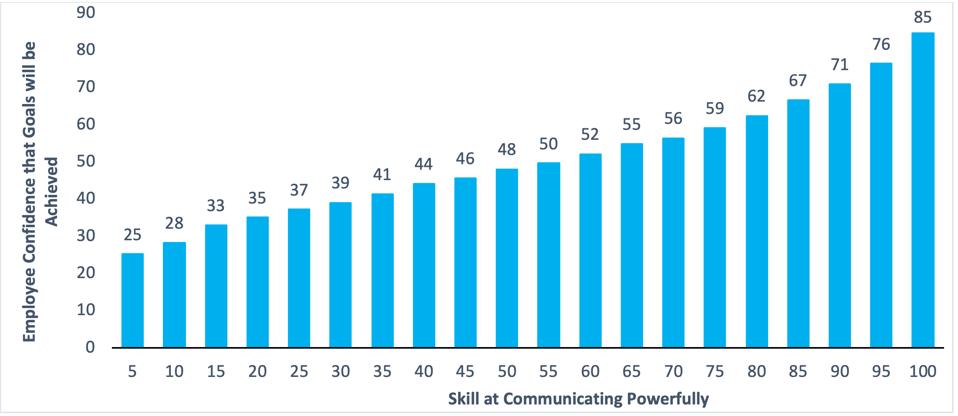
The data from 97,822 leaders in the graph below show the effectiveness of leaders communicating powerfully on the horizontal axis.

On the vertical axis, we measured the percentile ranking on the level of confidence that direct reports had that their goals would be achieved. It’s evident from the data that leaders who were more skilled at communicating had direct reports who were much more confident that the organisation’s goals would be accomplished.

Communication study


Keeping employees Informed VS Communicating Powerfully

The first step in improving communication is keeping others well informed. Often leaders get negative feedback from their direct reports about not being informed of changes, new directions, or decisions that impact them.

The impact of keeping others informed has been measured in companies going through a merger. When a merger is announced, leaders are forbidden to share confidential information with their employees. This stern warning from the lawyers causes many managers to stop almost all communications with their teams.

In spite of the warnings, other managers continued to meet with their teams often and talk with team members about their concerns. Even though many of the team members’ questions could not be answered, they continued to communicate. Managers who met regularly and communicated were substantially more successful after the merger, while managers who quit communicating had higher turnover and more integration problems post-merger. Everyone wants to be well informed and is frustrated when they are surprised by changes.

Many managers set a goal to keep direct reports and their managers well informed. Doing this is a beginning step of becoming a powerful communicator. The table below illustrates some of the differences between a leader who is an informer and one that is a powerful communicator.

Communicating Powerfully

Becoming a Powerful Communicator as a Leader

To discover what leaders did to move from being an informer to a powerful communicator, Zenger Folkman analyzed data from 97,700 leaders. Looking at the data, there were five enabling skills that facilitated leaders in communicating powerfully.

If leaders were just above average on their performance on these five skills, their ability to communicate powerfully would be rated at the 82nd percentile. The implication of this research is that leaders need to have a reasonable level of skill in all five areas.

Inspires and Motivates Others

For most people, this feels like a big challenge, but a few simple techniques that can help every leader to be more inspiring. Making an emotional connection can make communications more inspiring while being distant and elusive is uninspiring. Leaders can make an emotional connection by including others in the conversation, thanking people for their contributions. Using stories to illustrate important points also makes communications more memorable and a higher impact. Inserting passion, excitement, and fun into what is said always helps. 

Strategic Perspective

What can make communications more impactful is to link the issue being discussed back to the strategy and vision of the organisation. Linking a problem back to the strategy illustrates why an issue is important. This is easy to do, but too often, leaders assume that others automatically see the linkage.

Focus on Priorities

Often people in organisations complain that every issue brought up is the number one priority. It’s called the colour of the day because these priorities change so regularly. By linking the issue to a priority, a leader is communicating the importance of that issue. When leaders do this, it increases the probability of implementation substantially.

Address the Individual

Too frequently, communications are focused on broad organisational issues that no one feels a personal responsibility to change. By breaking issues down into specific actions that individuals need to take makes every communication more actionable.

Building Trust

This skill has a dramatic effect on communications. Imagine a leader giving an inspiring speech where they say all the right things in an inspiring way, but you distrust this leader. Everything is neutralised because of the lack of trust. With high levels of trust, even mediocre communications are accepted and utilised.

When we looked at data from over 3,000 leaders who were working to make improvements, communicating powerfully was the one competency that showed the largest level of improvement. Every person can do something to improve in this area, and even a little progress will have a significant impact. 


Article adapted from Joe Folkman (founder of two leadership development firms, Novations and Zenger Folkman)

Read More
Others

Boost Your Ability to Lead Successful Change

Most organisations face the choice of “change or die.”


The fact is that 7 of every 10 companies have experienced significant shifts—such as serious downsizing, explosive growth, or merger—in the last two years. Leaders are responsible for leading new initiatives but often lack any formal preparation or the skills to facilitate or lead change in their organisation.

New implementation of change includes digital transformation, new products, introduction, world economic trends, impact of tariffs and new technology. 

The need for change exists in every organisation. Other than irrational change solely for the sake of change, every organisation must innovate to survive. If your organisation doesn’t innovate and change in accordance with market driven needs and demands, it will fail – it’s just that simple. 

In this webinar, Joseph Folkman and Jack Zenger will give you some insights to understand how leading change is important for all organisations and why is change necessary to survive?

Read More
Others

8 Ways To Get a High-Performance Rating From Your Boss

Why do some individuals get great performance reviews? Is it just random? Did the stars align for them that year? While the sample size sharing today is not very large, the results to be quite compelling.

Dataset of 179 leaders who were given a 360-degree assessment rating on a series of 49 behaviours. On average, each leader was evaluated by 11 others (manager, peers, direct reports, and others). Their manager also gave each person a performance rating, which of the behaviours were most strongly associated with the performance ranking. Eight behaviours were all highly significant. 

1. Trend and Problem Spotter

Even though people find a way around the problems, they resist just fixing what is broken. Everyone gets so caught up in their day-to-day tasks that they fail to notice important things happening right before their eyes. Fixing a problem will help everyone recognise your value. At the same time, another way to add value to your organisation is to notice a new trend. 

2. Norm Challenger

Every organisation engages in some redundant and even borderline wasteful activities, and if you can be the person who asks respectfully, “Why do we do this?” There is a chance that unnecessary activity might not need to be done anymore. Often these “unnecessary” things are reports that are created (which no one reads), processes that take too much time for the value they create or meetings we have for the sake of meeting. Be bold enough to challenge these norms, but wise enough to do it politely and constructively. 

3. The Role Model, not Rebel

Organisations are successful when people collaborate and work well together. Take a minute and think about the behaviours you want your team members to emulate and the ones that you hope others don’t follow.  

4. Popular Cooperator

Set a goal to be more cooperative with others, especially in other parts of the organisation. We all love our independence and our freedom. Take the time to consider how what you are doing will impact others in the organisation, and rather than letting them be surprised, give them a heads-up.  

5. Potential Problem Anticipator

This is an advanced skill that is not difficult to master. People who do this well are always recognised and appreciated. All that is generally required to anticipate problems is when you start a new activity, make an important decision, or institute a new procedure, ask yourself the question, “What could go wrong?” The research is clear that most problems can be anticipated, but most people never take time to ask the question, “What could go wrong?” 

6. A Trusted Advisor

A lack of trust from others can have an extremely negative impact on a person’s performance and effectiveness. When others question your motives or lack faith in your abilities, that can create significant problems. Our research on trust revealed three enabling behaviours that improve trust. The first is improving relationships with others. To put it simply, we trust people that we like. The second is knowledge, judgment, or expertise. We trust people who have correct insights and understanding of problems or solutions. The third is to be more consistent. If you say you are going to do something, then make sure you do it.

7. Salesman Mentality

People don’t want to be told, they want to be sold. They want to be persuaded rather than commanded. Even if you believe you have the authority to tell others what to do, asking others and thanking them is always a better way.

8.Challenge Acceptor

Be willing to take on and do something that is challenging and difficult. We all feel like we are too busy and have too much on our plate to take on another difficult assignment. But when a person signs up to do something difficult, others notice and appreciate the effort.

What is interesting is that people that choose to take on a difficult task are more satisfied with their job and engaged in their work. In addition, taking on a challenging assignment may help you to learn a new skill, which increases your value to the organisation. 


Article adapted from Joseph Folkman (founder of two leadership development firms, Novations and Zenger Folkman)

Read More
Others

Coping with Stress, Fear and Anxiety during COVID-19

The uncertainty and rapidly changing situation of the COVID-19 pandemic has undoubtedly created a lot of stress, fear and panic – and I am sure at some point you have also experienced this. We know that this pandemic has likely brought many changes to how you live your current life, the uncertainty, altered daily routines, financial pressures and social isolation. 

Some of us will have had to cope with increased caring responsibilities and its impact can be overwhelming. Social distancing makes it even more challenging. Naturally this will have affected our stress levels and our ability to cope.

“The human engine, like any other, runs on energy. The more you have at your disposal, the healthier you’ll be and the better you’ll feel and perform. But you can’t continually run an engine in the red zone, at max output, or it will burn out. “

Robert J. Kriegel, Ph.D., Contributor (Author, Mental Coach)

It is normal to feel stressed, worried and anxious during this period. It is therefore important that you know how to cope with your emotional, psychological health. and maintain your mental wellness during the COVID-19 Pandemic. 

To start off, stay positive as much as you can and being able to make light of even the darkest of situations can massively increase your chances of being able to cope with this crisis.

If you are feeling stressed or anxious, here are some tips on how you can cope.

  1. Practice self-care

Less than two percent of Aussie women eat enough vegies - 9Coach

Image credit: 9coach

Self-care is the active process of acknowledging and tending to your needs. Basic self-care will keep your immune system strong and your emotional reserves full. Eat healthy and maintain well-balanced meals. Eating healthy will provide your body with adequate vitamins and minerals to boost your immune system, keeping you strong and healthy. Try mindfulness apps.

2. Take breaks

Classical Music and Studying: The Top 10 Pieces to Listen to for ...

Image credit: Live Smart Asia

Take a short break to refuel and engage in something that truly takes you mind off our stress. Many leaders talked about taking timeout each day for thinking. From watching, reading, or listening to news stories, including social media. Some talked about just having some quiet time.

Taking breaks may feel like running away, but isn’t: rather, it’s a way to refresh ourselves to dive back into the fight more effectively. So give yourself a break. An active break. Regularly.

3. Get enough rest 

All About Beauty Rest And Sleep | Shinagawa Aesthetics Blog

Image credit: Connect health and community

Try to get at least 7 hours of sleep every night. Getting enough sleep is a basic but important way to keep stress away. With enough sleep, you will be able to concentrate better and be more productive in the day, allowing you to cope more effectively with stressful situations. It is good to maintain a regular sleep schedule and practice healthy sleep habits such as limit to screen time 30 mins before bed time. 

4. Make time for yourself 

Style Transfer on Android in Kotlin using Fritz AI and CameraX

Image credit: Connect health and community

Take the opportunity to explore related skills. Set aside some time for yourself regularly. Make the most of the reality that you are in. 

Here are some examples:

  • Art and Crafts  
  • Meditate 
  • Clean the house 
  • Play with a pet
  • Read a book
  • Watch your favourite movie
  • Take an online class or attend webinars
  • Host a virtual gathering (House party is one popular app now)


5. Connect with your loved ones 

Facebook announces `` Portal TV '' that enables video chat on TV ...

Image credit: Gigazine

Talk to people you trust about your concerns and how you are feeling. Your family, colleagues or friends may also experiencing stress about the outbreak. You can also talk about your feelings and enjoy conversation unrelated to the outbreak.

Recognise your stress signals:

  • Sleeping problems (eg. Insomnia) 
  • Body pains (eg. stomachache or headaches or muscle spasms) 
  • Muscle tensions
  • Lack of energy (eg. fatigue and feeling weak) 
  • Trouble Concentrating
  • Mild Health issues


According to the Four Branch Model of Emotional Intelligence, the ability to recognise your emotional state is essential in order to understand and manage your emotions.

If you have been noticing these symptoms, it is possible that you may be experiencing a normal stress response. The World Health Organization has declared COVID-19 a pandemic to highlight the level of concern and spark measures of precaution.

Signs of burnout:

  • Emotional exhaustion
  • Cynicism
  • Reduced personal efficacy


Once you acknowledge your stress, tracing the stressor and understanding the issue can help you to problem solve. If used as a signal, your stress can motivate you to manage what you can. Taking action to combat a part of the problem can help you to reduce your symptoms.

While it may not be possible to eliminate all the stresses in your life, you could seek out ways to manage stress in your daily life.

Lastly, think positively, even during stressful situations. Viewing a stressful situation positively helps you see it in a different way. Instead of an obstacle, see the situation as an opportunity to challenge yourself! Instead of worrying about our ambiguous future, make the most of the reality that you are in. Check out online courses or webinars available out there that you might be interested to upskill. 

If you need any additional support, get in touch. with National CARE Hotline (6202-6868) . There are over 400 psychologists, counsellors, social workers, psychiatrists and public officers have volunteered to man the hotline. If you are a stress management consultant looking to upskill, join our Stress Management Certification training that will educate learners on the application of the tools to help others at your workplace and at home to manage stress.

Wishing everyone the best – stay happy and healthy, look after yourselves and each other – and most importantly maximise your well-being! 

Read More
Others

Continuing To Serve You During This COVID-19


Dear Valued Customers, 

We hope that you and your loved ones are well and safe.
 
In view of the new implementation from The Multi-Ministry Taskforce, enhanced social distancing measures have been kicked in, as a circuit breaker to curb the further spread of the COVID-19.   

Thus, all in-person training programmes from 7 April (Tuesday) to 4 May 2020 (Monday) shall be postponed.

BUSINESS CONTINUITY

Nonetheless, the team will be telecommuting and we will still be able to fulfil online assessment orders during this period.
 
We remain fully committed to serving your business needs so that we can all operate in the best way possible.  
 
Please watch out our space in official website, Facebook and LinkedIn sites where we will provide more updates on a series of webinars and online training courses that we are launching from May onwards.  
 
We take this time to thank all the unsung heroes, all the frontliners and healthcare workers whom we appreciate with all of our hearts.  

Meanwhile, our Online CBC certification is now conducted remotely and we invite you to join us in our session here. We hope to support you through the current challenging times. 

We are certain that we will all overcome this crisis and come out even stronger. Let us all do our part to break this COVID-19 transmission.


OUR ASSURANCE TO YOU

Public Workshops & Certification

Postponed

In view of the current pandemic, we have formally postponed all in-person public workshops and certification progrmames until after the 4th of May. We will continue to monitor the situation and any measures that the Singapore government implements, and subsequently announce the rescheduled dates across all our communication platforms in time.

Online DISC Certification

CBC & CABC

This season is an opportune moment for you to upskill yourself. Once COVID-19 passes, would you be one of the front-runners to tap on the upward wave?

We are launching both our flagship certification courses online – Certified Behavioural Consultant (CBC) Certified Advanced Behavioural Consultant (CABC)! While the objectives of the programmes largely remain the same, the changes would be in the format and method of delivery to participants.

Online CBC at a glance:

  • Blended learning format that includes self-directed e-learning and live online training sessions.
  • Includes 150-minutes of video tutorials by Sandy Kulkin & John Schindell (IML), and approximately 60mins of additional self-directed learning through comprehensive reviews and case studies
  • Includes 4-hours of Live Online Training across 2 sessions with our Master Trainers who will walk you through additional content, review case studies in-depth and handle Q&As.
  • Complete the online certification across a span of 2 weeks and receive your certificate as a Certified Behavioural Consultant!


Online CABC at a glance (coming soon..):

  • Blended learning format that includes self-directed e-learning and live online training sessions.
  • Includes 4.5-hours of video tutorials by Sandy Kulkin & John Schindell (IML), and approximately 60mins of additional self-directed learning through comprehensive reviews and case studies
  • Includes 6-hours of Live Online Training across 2 sessions with our Master Trainers who will walk you through additional content, review case studies in-depth and handle Q&As.
  • Complete the online certification across a span of 2 weeks and receive your certificate as a Certified Advanced Behavioural Consultant!


Our first run of Online CBC is schedule to commence on 5 May. Online CABC is currently in the works and will be scheduled for early June. You may find more details on our website or contact us to enquire.


Online Leadership Training

ELLO – 360 Feedback Assessment

This award-winning leadership programme is now also available online! The Extraordinary Leader Live Online (ELLO) by Zenger Folkman is now packaged in a 2-part Online Training session (3-hours each), with 1 to 2 days between sessions to allow time for ‘homework’ to be completed between sessions. Participants will complete the multi-rater (360) feedback assessment and unpack their report with our certified trainers.

ELLO is based on a proven framework for helping individuals make a profound difference in their teams and organisations. It is highly effective for middle to senior leaders in the organization. This is good time to reassess your leadership effectiveness and craft your personalized development plan. Contact us to enquire for more information.

Webinar 

While the COVID-19 pandemic has brought many of our regular businesses to a standstill, we want to commit to our promise as your trusted training partner and continue providing you with educational and relevant insights.

Watch our website and social media site for upcoming the webinars we have installed for you! 

Read More