Executive Coaching
Others

Coaching Leadership and Leadership Coaching: What’s the difference?

Executive Coaching
Executive Coaching

Both these terms are often used interchangeably. However, these are distinct concepts that play unique roles in shaping you into effective leaders.

We delve into the nuances of Coaching Leadership and Leadership Coaching, highlighting their differences and emphasising their significance in the realm of personal and professional growth.

Coaching Leadership

Coaching Leadership is a leadership style characterised by your emphasis on cultivating a coaching mindset within your team.

In this approach, you assume the role of a coach, guiding your team members towards self-discovery and personal development.

The primary focus is on unlocking individual potential, fostering a culture of continuous learning, and empowering your team members to take ownership of their growth.

Here are some key characteristics of Coaching Leadership:

  • Empowerment, not Control

Coaching leaders prioritise empowerment over control. You believe in the capabilities of your team members and aim to facilitate an environment where individuals feel empowered to make decisions, take risks, and learn from their experiences.

  • Active Listening and Feedback

Effective communication is at the core of Coaching Leadership. You actively listen to your team members, providing constructive feedback to facilitate their growth.

The emphasis is on creating a two-way communication channel that fosters understanding and collaboration between you and your team members.

  • Questioning for Reflection

Coaching leaders often use questioning techniques to encourage self-reflection. By asking thought-provoking questions, you can guide your team members to explore their thoughts, motivations, and potential solutions independently.

  • Growth Mindset

As a coaching leader, you adopt a growth and developmental mindset and view challenges as opportunities for growth.

You support your team in overcoming obstacles, fostering their resilience and positive attitude towards learning.

Leadership Coaching

On the other hand, Leadership Coaching is a professional service that current and aspiring leaders seek to enhance their leadership skills and achieve specific goals.

It involves a one-on-one relationship between a trained coach and a leader, focusing on personalised development plans and strategies for achieving professional objectives.

Here are some key characteristics of Leadership Coaching:

  • Personalised Approach

Leadership Coaching is tailored to your specific needs and goals as a leader.

Your coach would work closely with you to identify your strengths, weaknesses, and areas for improvement, creating a customised plan for your professional development journey.

  • Goal-Oriented

The coaching process is goal-oriented, with you and your coach setting objectives and defining measurable outcomes together.

Whether it’s improving your communication skills, navigating the latest organisational challenges, or enhancing your decision-making, your coaching journey should ultimately be directed towards achieving tangible results.

  • Accountability

Leadership Coaching involves a level of accountability. Your coach should hold you responsible for your commitments and actions, ensuring that the strategies you agreed on with your coach are implemented.

This accountability fosters a sense of responsibility and discipline in your approach as a leader as well.

  • Skills Enhancement

While Coaching Leadership focuses on your ability to coach others, Leadership Coaching aims at enhancing your specific leadership skills.

This could include communication skills, conflict resolution, strategic thinking, or any other competency relevant to your role and goals as a leader.

Coaching Leadership is a leadership style that permeates the entire team, fostering a coaching culture within the organization. Leadership Coaching, on the other hand, is a targeted, individualised process designed to hone specific leadership skills and achieve predetermined goals.

Both concepts are invaluable in the professional development landscape, and successful leaders often find a balance between adopting Coaching Leadership as a leadership style and seeking Leadership Coaching to refine their skills.

Adopting both approaches can lead to transformative leadership, creating resilient, empowered teams and driving sustained business success.

Discover how you can be a Coaching Leader, or how you can embark on a personalised Leadership Coaching journey today.

Want to add coaching to your leadership journey? Call us at 6346 1455 or find out more about our Certified Career Coach workshop here.

©Published by Lifeskills Institute Pte Ltd


Read More
Others

5 Signs Your Organisation is Ready to Embrace a Coaching Culture

The question on every business leader’s mind today is: “How can my organisation adapt, innovate and stay competitive?”

One powerful strategy to achieve this is by adopting a coaching culture – one that fosters continuous learning, a growth mindset, and self-improvement among employees, ultimately driving better performance and results.

But how do you know if your organisation is ready to embrace such a culture?

We explore five key signs that indicate your organisation is poised for the transition:

1. Your (fellow) leaders are committed and supportive

The first and perhaps most critical sign that your organisation is ready for a coaching culture is the commitment and support of you and your fellow leaders.

Leadership plays a pivotal role in setting the tone and direction for any cultural shift within an organisation. When leaders not only endorse but actively engage in coaching, it sends a powerful message throughout the organisation.

Leaders who are committed to coaching understand that it’s not just a one-time intervention but a continuous process. You value the development of your team members and are willing to invest time and effort to help them grow.

In a coaching culture, leaders act as coaches themselves, guiding their teams toward achieving their goals and fostering an environment of trust and collaboration.

2. Your employees (or peers) want to engage in self-improvement

A coaching culture thrives when all employees are eager to engage in self-improvement. This self-motivation is a driving force behind the success of coaching initiatives.

When your employees recognise the value of coaching and activel seek opportunities to grow and develop, it indicates a readiness for a coaching culture.

Encourage open dialogue within your organisation to gauge employees’ interest in coaching and self-improvement. Conduct surveys or hold discussions to understand their aspirations and needs. If you find a high level of enthusiasm for personal and professional growth, it’s a positive sign that your organisation is primed for a coaching culture.

3. Your team already has a growth mindset

A growth mindset is a key ingredient for a successful coaching culture. When people believe in their capacity to learn and improve, coaching can have a profound impact. A growth mindset encourages individuals to embrace challenges, learn from failures, and continuously seek opportunities for development.

Assess your team’s mindset by observing how they react to setbacks and challenges. Are they open to feedback and willing to adapt? Do they view obstacles as opportunities for growth?

If your team members already exhibit these characteristics, it’s a clear indication that they are ready to benefit from a coaching culture.

4. Your organisation’s goals and objectives are aligned

A coaching culture should align seamlessly with your organisation’s goals and objectives. When coaching is integrated into the fabric of your business strategy, it becomes a powerful tool for achieving those goals.

Alignment ensures that coaching efforts are not isolated but are directed toward driving the organisation forward.

Evaluate your organisation’s strategic priorities and assess how coaching can contribute to achieving them. Identify specific areas where coaching can make the most significant impact, such as leadership development, team performance, or employee retention.

When your coaching initiatives align with your broader goals, it becomes a catalyst for success.

5. You already have a good L&D programme

A solid foundation in learning and development (L&D) is another telltale sign that your organisation is ready to embrace a coaching culture.

Effective L&D programs are designed to facilitate skill development, knowledge acquisition, and continuous learning. These programs often incorporate coaching as a valuable component.

Examine your existing L&D programme to see if coaching is already a part of it or if it can be easily integrated. If your organisation values employee development and invests in providing resources and opportunities for growth, it’s a strong indicator that a coaching culture will be well-received and can build upon this existing commitment.

As your organisation seeks to thrive in today’s uncertain climate, adopting a coaching culture has become a strategic imperative.

As long as your organisation ticks most, if not all, of the above 5 points, it is high time to start embracing a coaching culture.

Let us help you turn your leaders into certified coaches who’ll nurture a coaching culture within your organisation.

Want to add coaching to your leadership journey? Call us at 6346 1455 or find out more about our Certified Career Coach workshop here.

©Published by Lifeskills Institute Pte Ltd


Read More
Others

The Power of Personalised Coaching

Like most things, a one-size-fits-all approach to coaching no longer suffices. You and your fellow leaders today face very diverse challenges, and the demand for personalised coaching has never been more critical.

Generic coaching may have once been the norm, but it limits your leadership potential and growth. In this article, we explore why generic coaching falls short, why coaching must be personalised, how to achieve such personalisation, and the practical steps to implement personalised coaching effectively.

Why generic coaching limits you as a leader

Generic coaching often treats leaders as if you are cut from the same cloth, sometimes ignoring your unique strengths, weaknesses, and developmental needs.

Every leader brings distinct experiences, skills, and goals to the table. Failing to acknowledge this individuality can hinder growth and limit the leader’s ability to reach their full potential.

Further, leadership is not a one-size-fits-all endeavor. The challenges you face as a leader can vary greatly depending on your industry, organisation size and set-up, and even your team dynamics.

Generic coaching fails to consider these contextual differences, leaving you ill-equipped to navigate your specific challenges effectively.

Leadership coaching is not just about imparting knowledge or skills; it’s about helping you and your leaders to apply those insights to solve real-world challenges.

Generic coaching lacks the specificity required to address the unique issues that you encounter in your roles, rendering you less effective in driving meaningful change.

Why your coaching must be personalised

Personalised coaching allows you to identify and leverage your unique strengths while addressing your key weaknesses. When coaching is tailored to your specific needs, you can unlock your full potential and excel in your role.

As a leader today, you must be adaptable. Personalised coaching equips you with the skills and mindset needed to adapt to changing circumstances, making you more effective in your decision-making and problem-solving.

When you receive personalised coaching, you are also more likely to take ownership of your own development. This sense of ownership encourages you to actively engage in the coaching process, leading to more meaningful and sustainable growth.

How can coaching be personalised?

To personalise coaching, start by conducting a self-assessment. These assessments can include 360-degree feedback, personality assessments, and skills assessments. The data collected helps you and your coach identify strengths, weaknesses, and areas for improvement.

Coaches will work with you to establish clear and specific goals that align with your personal and professional aspirations. These goals should be challenging yet achievable, providing direction and motivation for the coaching journey.

Based on the assessments and goals, your coach should create customised development plans for you. These plans could include a combination of skill-building exercises, leadership workshops, mentoring, and feedback sessions.

Personalised coaching is an ongoing process. Your coach should regularly provide feedback to you and adjust the coaching plan as needed. This ensures that coaching remains relevant and effective as you progress in your leadership development journey.

How to implement personalised coaching?

One of the key factors in implementing personalised coaching successfully is selecting competent coaches who have the skills and experience working effectively with leaders. Coaches should be able to adapt their approach to the unique needs of each leader.

Set clear objectives for the coaching program. Define what success looks like and how it will be measured. This clarity helps align coaching efforts with organisational goals and ensures that the coaching you receive is purposeful.

Frequent progress reviews are essential. Check in with your coach regularly: Are you making measurable progress toward your goals? Are the coaching sessions effective in addressing your specific needs?

Ensure open and honest communication between you and your coach. Be willing to provide feedback on your coach and your experiences to share insights and observations. This feedback loop is vital for continuous improvement – for both you and your coach.

Leadership development is an evolving process. As you grow and circumstances change, your coaching needs may shift. Be prepared to adapt the coaching program to meet these changing needs effectively.

Get personalised leadership coaching today

Generic coaching no longer serves the needs of leaders. To maximise leadership potential and drive meaningful growth, coaching must be personalised.

Investing in personalised coaching is an investment in the future success of you, your leaders, and your organisation as a whole.

If you’re looking to go beyond generic coaching and want to take a personalised approach to coaching, find out more now and reach out to us today.

Want to add coaching to your leadership journey? Call us at 6346 1455 or find out more about our Certified Career Coach workshop here.

©Published by Lifeskills Institute Pte Ltd


Read More
Others

Want to Make an Impact in Your Leadership? Add Coaching to Your Skillset.

The pursuit of extraordinary leadership is an ongoing journey that requires a diverse set of skills and attributes.

In this pursuit, one of the often-overlooked yet transformative aspects is adding coaching into your skillset.

The Evolution of Leadership

Leadership has come a long way from the traditional top-down approach, where one might have primarily directed and controlled teams. Leadership today is marked by collaboration, adaptability, and a focus on nurturing people’s potential as individuals and as a team. The transition from mere management to true leadership involves understanding the nuances of human behavior, communication, and motivation.

At Lifeskills Institute, our philosophy centers around three essential principles — Character, Competence, and Connectedness. We believe an extraordinary leader should embody these principles as well, and extend them to the realm of coaching. Let’s look at how adding coaching skills can enhance each of these aspects.

Character: Authentic leadership

Character is the foundation of effective leadership. Authentic leaders understand their strengths, weaknesses, values, and motivations. You lead with integrity and transparency.

Integrating coaching into leadership allows you to not only be self-aware but also empower others in their own journey of self-discovery. A coaching leader encourages open conversations that lead to a deeper understanding of their team members’ aspirations and challenges. This fosters an environment of trust and authenticity, where everyone feels valued and supported.

Competence: Developing potential

Competence in leadership involves a deep understanding of the skills required to drive success. As leaders embrace coaching, you tap into your ability to develop the potential of your team members.

Coaching helps you identify strengths and areas for growth in individuals and tailor development plans accordingly. This approach nurtures a growth mindset and a culture of continuous learning. By becoming adept at coaching, you enable your teams to reach new heights too.

“Coaching is unlocking a person’s potential to maximize their own performance.
It’s helping them to learn rather than teaching them.”
– Timothy Gallwey, author and coach

Connectedness: Connecting with your team

Connectedness forms the heart of meaningful leadership. Leaders who coach understand that strong relationships are built on effective communication, emotional intelligence, and active listening.

When leaders add coaching to their skillset, they create an avenue for genuine conversations that go beyond work-related tasks. These conversations touch on personal aspirations, challenges, and growth opportunities. Through coaching, leaders connect on a deeper level with their team members, fostering a sense of belonging and shared purpose.

The Power of Coaching in Leadership

Coaching is not a one-size-fits-all approach but rather a dynamic tool that adapts to various leadership scenarios. Here’s how you can harness the power of coaching in your journey toward becoming an extraordinary leader:

  • Empowering through questions: Coaching involves asking powerful questions that prompt reflection and insight. By mastering the art of questioning, you can inspire your team members to think critically, solve problems, and make informed decisions. This approach encourages greater autonomy and ownership.
  • Active listening: Effective coaching relies on active listening. By listening empathetically, you can create an environment where your team feels valued and heard, fostering a culture of openness and collaboration.
  • Goal setting and accountability: Coaching encourages setting clear goals and holding individuals accountable for their progress. As a coaching leader, you can help your team members define their objectives, create actionable plans, and provide guidance along the way. This leads to measurable growth and achievement.
  • Feedback and growth: Constructive feedback is a cornerstone of coaching. You need to provide feedback in a supportive and constructive manner to empower your team members to learn from their experiences and continuously improve their performance.

In your pursuit of becoming an extraordinary leader, integrating coaching skills sets the stage for unparalleled growth, collaboration, and impact.

Our emphasis on Character, Competence, and Connectedness perfectly aligns with the principles that underlie effective coaching.

By embracing coaching, you not only enhance your own leadership abilities, but also empower your team members to reach their full potential.

Want to create a coaching culture in your organisation’s leadership? Find here to find out more about our ‘The Extraordinary Coach’ programme.

©Published by Lifeskills Institute Pte Ltd


Read More
Others

5 Stages for Effective Performance Coaching

Wouldn’t it be great if you could recognise and meet where your staff is on the spectrum of change to help them improve their work performance?

Before delving into the five stages to consider for effective performance coaching, we need to determine the reasons for underperformance.

Is your staff underperforming because they feel as though they are being punished for performing? Do they feel that they are rewarded for good performance by having more work piled on them?

Perhaps your team members are unwilling to take on challenging and risky assignments as they feel that the punishment for failure overrules all reason to do it for the rewards of success. Or are they unsure on how to go about carrying out the task or lacks the ability to do it?

As you speak to your staff regarding the issue at hand, frame the conversation to focus on one area or issue.

This includes listing the issue to be discussed and the expected outcome which both the manager and staff are aiming for. Also determine the time frame for the discussion and agreements on confidentiality.

Consciously suspend your judgement and maintain a curious mindset as you begin the conversation.

Your goal in the coaching conversation is to help your employees gain a different awareness of and insight into the performance issue as awareness precedes change.

With the new awareness, your coachees would have an idea of the possible solutions that can be considered.

If your organisation has yet to embrace a coaching culture,  fret not, you can still engage in a conversation with these stages in mind.

Precontemplation Stage: “I’m not considering a change”

When your staff is at the precontemplation stage, they are not considering making a change in their behaviour or attitude because of denial, obliviousness or resignation. If your coachees are in this stage, invite them to begin thinking about change.

Ask them questions like:

  • “How do you see this situation? What is happening?”
  • “What is working well?”
  • “What makes it challenging?”
  • “How might you have contributed to this situation?”
  • “How might others see the situation?”

Here’s a tip: give them time after the session for the information to sink in.

Contemplation Stage: “I’m considering making a change but I’m not committed to it.”

At the contemplation stage, the staff weighs the benefits and costs of the behaviour as well as the value and costs of the change. If you’re meeting your staff at this stage, help them to examine the costs and benefits of the change.

Ask questions such as:

  • “What are the consequences if the situation doesn’t change?”
  • “Tell me more about the business costs of this issue.”
  • “Imagine that a year has passed and nothing has changed. What would that be like for you?”

At the end of this phase, the coachees can make a decision to either change or not.

Preparation Stage: “I’m committed to changing and I’m beginning the process of change)

This stage is where the employee actively investigates possible ways to change. When your team member is at this stage, address the barriers to them engaging in the forward movement towards the change.

For instance, ask them:

  • “What do we need to keep in mind as we move forward on this issue?”
  • “What challenges do you think you would need to overcome?”
  • Followed by “What support do you need?” and
  • “Who can you get the support from?”

The support might be in the form of undergoing training or mentoring sessions. If the former is engaged, be sure to follow-up on how they will use them to help them improve their performance.

Action Stage: “I’m full on board with a change agenda.”

The action stage is where the employee commits to an action plan and makes is decisive to make the change. If this is where you are meeting them, help them to plan the action path and be generous with your affirmations for the steps taken.

Behavioural change will take time, effort, practice and reinforcement so be sure to be available to affirm them and give them feedback.

Maintenance Stage: “I’m continuing with my well-established patterns after six months of action.”

At this stage, employees are maintaining a new behaviour over a course of time, maybe six months, and follows through with ongoing milestones and measurement. Be sure to continue to praise them.

What happens if there’s a relapse and the employee reverts to their previous non-performance behaviour or feels frustrated and demoralised? As their coach-manager, engage in a problem solving discussion and be encouraging while re-engaging in efforts to move your coachees toward realistic goals. Ask them what other support they would need to meet their goals.

Moving ahead in performance coaching

Knowing where each of your team member is on the five stages will help you to know what is possible when exploring the desired state of performance and the paths that can be explored to get to the desired state.

Remember, people will not change until they feel a need to change. Your role as a coach-leader is to help your coachees gain an insight into their performance issue and let them decide if there is a need for change. With this new insight they will be able to, on their own, propose possible solutions in order to move forward (or not).

Before your next coaching session with your staff, analyse the real reason for their shortcomings in their performance. If you’re unsure of the real reason, how could you become more sure as you meet with each of them?

Having these five stages of change in mind, which stage do you think they are at? Then, think about what your focus would be during the coaching session as you move ahead in the performance coaching journey together with your staff.


©Published by Lifeskills Institute Pte Ltd

Lifeskills Institute is the strategic partner of Zenger Folkman for Singapore and Malaysia. Our Chief Enabling Officer, Ian Tan is a Master Facilitator certified by Zenger Folkman.

Zenger Folkman is a strengths-based leadership development company helping leaders elevate their people and organisations. Co-founders Dr. Jack Zenger and Dr. Joe Folkman utilise empirical data and behavioural evidence to help leaders become extraordinary.

Lifeskills Institute conducts The Extraordinary CoachTM Workshop  where participants will master the F.U.E.L. coaching model that can lead to a profound impact on those whom you are coaching.

You will be equipped to empower your coachees make better decisions on their own. And you will get to see how this empowerment and process correlates to levels of commitment, satisfaction, retainment and profitability.

Participants will also receive a self-survey which measures their coaching behavioural preferences and equip themselves with the toolset for effective coaching.

Read More
Others

The Power of a Coaching Culture

Source: istock – patcharee pornsipak

The Power of a Coaching Culture

simply described by the Centre for Creative Leadership, the “coaching culture” applies a coaching mindset to the entire organization. It might mean shifting mindsets and unraveling some set practices to allow for more open interactions, and meaningful feedback. This could influence organisational transformation that leads to improved productivity, higher performance, and possibly greater revenue.

What Does a Coaching Culture look like?

In a best-case scenario, a coaching culture could possibly be one that:

  • Empowers others to discover and reach their fullest potential;
  • Asks questions more than giving answers;
  • Provides ongoing feedback rather than only during annual reviews;
  • Considers people above profits;
  • Encourages learning, growth and even allows for failure;
  • Focuses on mindset shifts.

In essence, a coaching culture involves engaging in conversations with your employees. Much research has testified that there is a deep connection between employee engagement and their performance. In other words, the more engaged an employee is, the more motivated he will be in his work. It is therefore worthwhile for leaders to consider creating a strong coaching culture that drives organisational wellbeing.

How to Create a Coaching Culture?

In their whitepaper, “How Developing a Coaching Culture Pays Off”, Dr. Jack Zenger and Dr. Joe Folkman identified some steps that we can consider when creating a coaching culture.

  1. Set Clear Expectations

Senior leaders need to set the tone and send a clear message regarding the importance of coaching as a key element in effective managerial behaviour. This expectation must be intentionally factored in meeting agendas and given enough time to convey. This signals to all employees that coaching will be implemented seriously by the organisation, and ought to be taken seriously by employees as well.

  1. Create a Process to Follow

To promote the coaching culture, this expectation must be made concrete and practical so that the broad population of managers know exactly what must be done. Addressing questions like what are they to do? What is the purpose? What are the desired outcomes? can be aided if a simple process has been created that everyone can easily understand and follow.  It is found that the most successful coaching implementations invariably provide a structure and process that include helping the coach to identify the topic of successive coaching conversations. Tools that aid the process also include some mechanism by which the coach can gather ongoing feedback both ways.

  1. Provide Skill Training

Like any other skills, coaching has to be learned. It is also not a skill where one can attained just by watching another coach doing it. It is a skill that requires practice, which will enable competence and gain confidence. It is more practice that makes it more perfect each time when it is executed.

  1. Organise Systematically

Any change process in the culture must involve different parts of the organization and operate at all levels of the hierarchy. For a coaching culture to happen, it involves the entire workforce to see it as an integral part of interaction that happens between both the managers and the employees. It is a conversation that must happen both ways – the leaders and managers cascade the message, practice it in visible ways, and employees reciprocate this to achieve the same purpose.

  1. Monitor and Measure

To know if a coaching culture is successfully created, the tracking process needs to be in place. These measures will vary in different organizations; the key is to ensure that data can be collected from informal discussions with all managers and HR representatives as they interact with people.

Recent studies have shown that company culture is a top reason great candidates choose to work for a company; many workers even value culture over higher pay. The way we work is shifting, change is no longer an option; the younger generations of workforce are demanding this change.

When you create a coaching culture, you are also catalysing a change in your business to deliver a high performing environment that comes through a partnership of connected engagement, personal development, and committed support. Such is the power of a coaching culture that values people!

©Published by Lifeskills Institute Pte Ltd

Lifeskills Institute is the strategic partner of Zenger Folkman for Singapore and Malaysia. Our Chief Enabling Officer, Ian Tan is a Master Facilitator certified by Zenger Folkman.

Zenger Folkman is a strengths-based leadership development company helping leaders elevate their people and organisations. Co-founders Dr. Jack Zenger and Dr. Joe Folkman utilise empirical data and behavioural evidence to help leaders become extraordinary.

Read More
Others

Why Coaching Matters in Building Stronger Teams?

Source: istock – Nattakorn Maneerat


Why Coaching Matters in Building Stronger Teams?

Research by Zenger Folkman found that leaders who are able to coach are eight times more likely to become top-tier leaders as opposed to a leader who manages. Collected data from 4,212 leaders affirmed that those coach their team delivered greater effectiveness and impact shown through their work performance. Hence, improving engagement and commitment at workplaces among teams.

Manager versus Coach

Clearly, the expectations for leaders today are not just about being able to lead, instruct, or manage, and ensuring work performance. It is also about being able to connect, engage, inspire and impact the team. To be a leader, you need to also be a coach. Question is, is it possible that the manager can also be the coach? Or is it not a distinct role between a manager and a coach?

If there should be any distinctions between a manager and a coach, it would be the approach. A manager is usually directive or instructive, that means, the leader likely prefers to “tell”, so the interaction is mostly one-way except if there are questions from the team. A manager is usually more tasks focused; thus, can become impatient when having to deal with too many questions. This usually leads to low engagement with the team, and decrease in collaboration efforts.

Coaching, on the other hand, takes on a more collaborative and empowering approach. As the saying goes, instead of “providing the fish, it is teaching them how to fish”. It means directing the team towards their own resourcefulness to discover insights and opportunities that can be translated to knowledge they can own. This ownership is critical in bringing about a change in behaviour because of the conviction gleaned from the insights gained. A coach is always interested to see transformation that brings innovation through leading change.

Becoming an Effective Coach

Building on the 4,212 collected data of the leaders who coach their team, Zenger Folkman separated those who were rated as the most effective coaches.  They identified 20 behaviours that were most frequently used by this group of most effective coaches, and further conducted a statistical factor-analysis to determine their dominant behavioural patterns.

  1. Carve out the time

Effective coaching requires setting aside time and showing up for the experience. Practically this means accessing your calendar, and scheduling the times to contact the person involved to provide coaching.

  1. Focus on specific actions

Discuss the specifics and dilute the generalities or platitudes.

  1. Inspire others via positive interactions

Create a script that leaves the other person uplifted. The best coaches were consistently seen as positive catalysts for change, rather than critics. Other looked to them for ideas, inspiration, and direction. They were seen as constantly seeking superior performance through continuous improvement. The best coaches radiate energy and enthusiasm to others.

  1. Add your ideas and experience

Coaches are not mere passive listeners. Good coaches help the person being coached to see the issues and challenges they are facing. The coaches enable them to find good answers from themselves. At the appropriate time, they give their ideas and share their experience. They deliver observations with honesty and in a non-offensive manner.

  1. Freely give honest praise

Feedback can range from redirecting or corrective observations all the way to high praise and commendation. Both kinds of feedback have their time and place. Our research, however, convincingly shows that the best coaches spend most of their time recognizing and rewarding positive performance. Their goal is to build confidence ad self-esteem, which in turn encourages even greater effort. Positive expressions far outweigh negative comments.

  1. Foster collaboration

The best coaches emphasize superordinate goals that unify people and generate collaboration. They help those they coach to see opportunities to garner cooperation from other teams and departments. They do all they can to tamp down competition between departments and to replace it with selfless cooperation.

Directing team is highly necessary in the chain of command; however, breaking that chain will also not create adversity. In fact, breaking this chain and incorporating coaching effectively will create greater freedom for the leader, and greater empowerment for the team. To change behaviour and inspire new efficiency, there is a need to focus on what will drive this change.

To impact change and grow a stronger team, it is therefore important for managers to be equipped with coaching skills, as well as leaders to further honed their coaching skills.

Reference Source:
https://zengerfolkman.com/articles/six-down-to-earth-lessons-learned-from-the-most-effective-coaches/

©Published by Lifeskills Institute Pte Ltd

Lifeskills Institute is the strategic partner of Zenger Folkman for Singapore and Malaysia. Our Chief Enabling Officer, Ian Tan is a Master Facilitator certified by Zenger Folkman.

Zenger Folkman is a strengths-based leadership development company helping leaders elevate their people and organisations. Co-founders Dr. Jack Zenger and Dr. Joe Folkman utilise empirical data and behavioural evidence to help leaders become extraordinary.

Read More
Others

Can Managers Coach?


“Of course we can!”

Then why do employees say they are not being coached by their managers?

Well, probably because what is perceived as coaching sessions by managers are actually project review meetings where 90% of the time is spent discussing the staff’s work status updates. Sound familiar?

Even though such meetings are important, they do not help employees grow in their jobs. Most managers routinely conduct performance reviews but they seldom conduct career development sessions. Managers tend to lean towards solving problems immediately instead of framing a productive, career-building conversation.

Source : Unsplash

What is coaching?

Paraphrasing the European Mentoring & Coaching Council’s (EMCC Global) definition of coaching (and mentoring), it is a professionally guided process that maximises a client’s personal and professional potential. The two parties work together in a partnering type of relationship on the content & decision making level where the coach and mentor help clients see and test alternative ways for improvement of competence, decision making and enhancement of quality of life.

The International Coaching Federation (ICF) defines coaching as partnering with clients in a thought-provoking and creative process that inspires them to maximise their personal and professional potential. The process of coaching often unlocks previously untapped sources of imagination, productivity and leadership.

In both descriptions, you will see the element of a partnership between the coach and client. You will also see that the coach guides the coaching process but not the client; the guiding process allows the client to explore areas of discussion. The final direction the client takes is entirely the client’s choice. And this is after the client determines the topic has been explored as much as he desires to explore it. Confidentiality of the conversation is of course critical.

Zenger Folkman defines coaching as “interactions that help the individual being coached to expand awareness, discover superior solutions, and make and implement better decision.”

Although not explicit, the coaching relationship is also a partnership between the coach and client. The coach helps the client explore topics or issues to be able to let the client make the decision on the way forward.

“Wait, I’m not in control of the decision? But I’m his reporting officer and I am responsible to communicate the direction of the company to my downline and ensure they meet their KPIs. That means I am in control of the decisions and direction my staff, not them!”


Source : Pexels

The case for coaching

Research by Zenger Folkman has found that leaders who add coaching to their existing suite of strengths are eight times more likely to become a top-tier leader.

Eight times.

In fact, we can see some clear correlations between a leader’s coaching effectiveness and its impact on his or her direct reports. The charts below showcase this. Employees who receive coaching and feedback rate their supervisors much more positively, are more engaged at work and more committed to their work.

Source: Zenger Folkman

Source: Unsplash

How can managers be effective coaches?

Based on data collected from 4,212 leaders providing coaching to their direct reports and colleagues, Zenger Folkman determined six dominant behavioural patterns of the outstanding coaches.

Leaders who performed poorly on the six behaviours were rated as a bottom tier leader on their coaching skills. Those who performed all six behaviours exceptionally well were rated as a top tier leader.

It seems daunting to be proficient in all six behaviours. Which behaviour does one even start to focus and develop on?

Zenger Folkman’s research has found that if you did one of these skills well, your coaching effectiveness would be at the mid-range. If you did two of them well, it would raise your coaching effectiveness score. However, if you worked on and showcased three of these behaviours well, you would jump to being one of the top tier leaders on your coaching skills. Start by identifying the one skill that you would find easiest to improve on.


Source : Unsplash

So can managers coach?

Whether to coach or continue with project review meetings is entirely your choice. What we wanted to share and empower you with are just a few benefits of being a leader who coaches his team members and some practical tips on how you can develop your coaching skills.

Are you keen on equipping your team managers with coaching skills? What changes do you expect to see in your team’s performance as a result? Get in touch with us if you’d like to explore making your leaders coach-leaders. We’ll be happy to start a discussion with you.

Published by Lifeskills Institute Pte Ltd

Lifeskills Institute is the strategic partner of Zenger Folkman for Singapore and Malaysia. Our Chief Enabling Officer, Ian Tan is a Master Facilitator certified by Zenger Folkman.

Zenger Folkman is a strengths-based leadership development company helping leaders elevate their people and organisations. Co-founders Dr. Jack Zenger and Dr. Joe Folkman utilise empirical data and behavioural evidence to help leaders become extraordinary.


Read More
Others

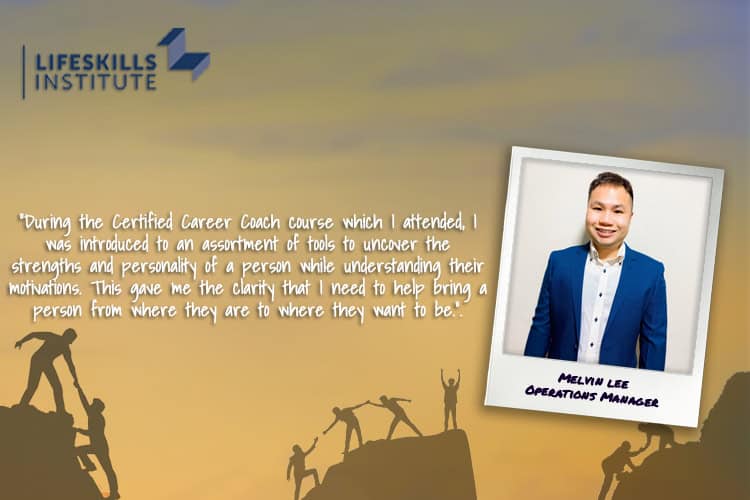
Scholarship Feature – Melvin Lee


I am a strong advocate for lifelong learning because there will always be new knowledge to learn and new skills to acquire. When the opportunity to apply for the Lifeskills Institute 2021 scholarship came along, I did not hesitate to submit my application because it has always been my desire to share my experience with other people and bring about a positive change to the people whom I work directly with at my workplace.

During the Certified Career Coach course which I attended, I was introduced to an assortment of tools that could help me uncover the strengths and personality of a person while at the same time, understanding the motivations of a person. This would then give me the clarity that I need to bring a person from where they are to where they want to be.

After the course, I offered to coach pro bono and interestingly, I had a couple of people who sent me a text to express their interest in being coached by me. As time is precious and limited, I reviewed the pool of people who texted me and I selected one person to be coached by me. The reason why I chose this person was because he is a friend that I know from the Basic Military Training, and I know that he was doing well in his career. Hence, what got me intrigued was his motivation to change what I thought was a successful career for him.

When I was coaching, I have found every coaching session to be quite a personal one because during a coaching session, there will be very private and intimate details that will be shared, and clients may feel very vulnerable. As a coach, it is our responsibility to maintain confidentiality while at the same time, giving clients the time and space they need to open up. To help clients reach their intended goal, transparency and openness is crucial. In the coaching that I have done recently, I have found that the coachee himself does have a solution to his problem and what he was looking for was an easy way out of his problem.

Recently, I was introduced to a smart artificial intelligence (AI) coach that claims to deliver personalised coaching programmes based on an individual’s working style. This led me to ponder over many questions such as, “Can an AI coach truly replace human coaches? How can human coaches leverage on technology for coaching? Is information shared with an AI coach truly secure and private? What level of responsibility does an AI coach have to deliver results for its clients?” Though it is still early to tell if AI coaching will truly take off, I have personally enrolled myself into two of such programmes to see if they are truly effective. So far, the results of the AI weight loss coaching programme that I have enrolled in seems promising, but that itself requires a lot of self-discipline.

As I continue to hone and refine my coaching skill, I am mindful that technology can play a part in the coaching process. Hence, I hope to eventually be able to implement some tools that will best optimise the time that I spend with my clients.

Melvin Lee

Operations Manager


Read More
Others

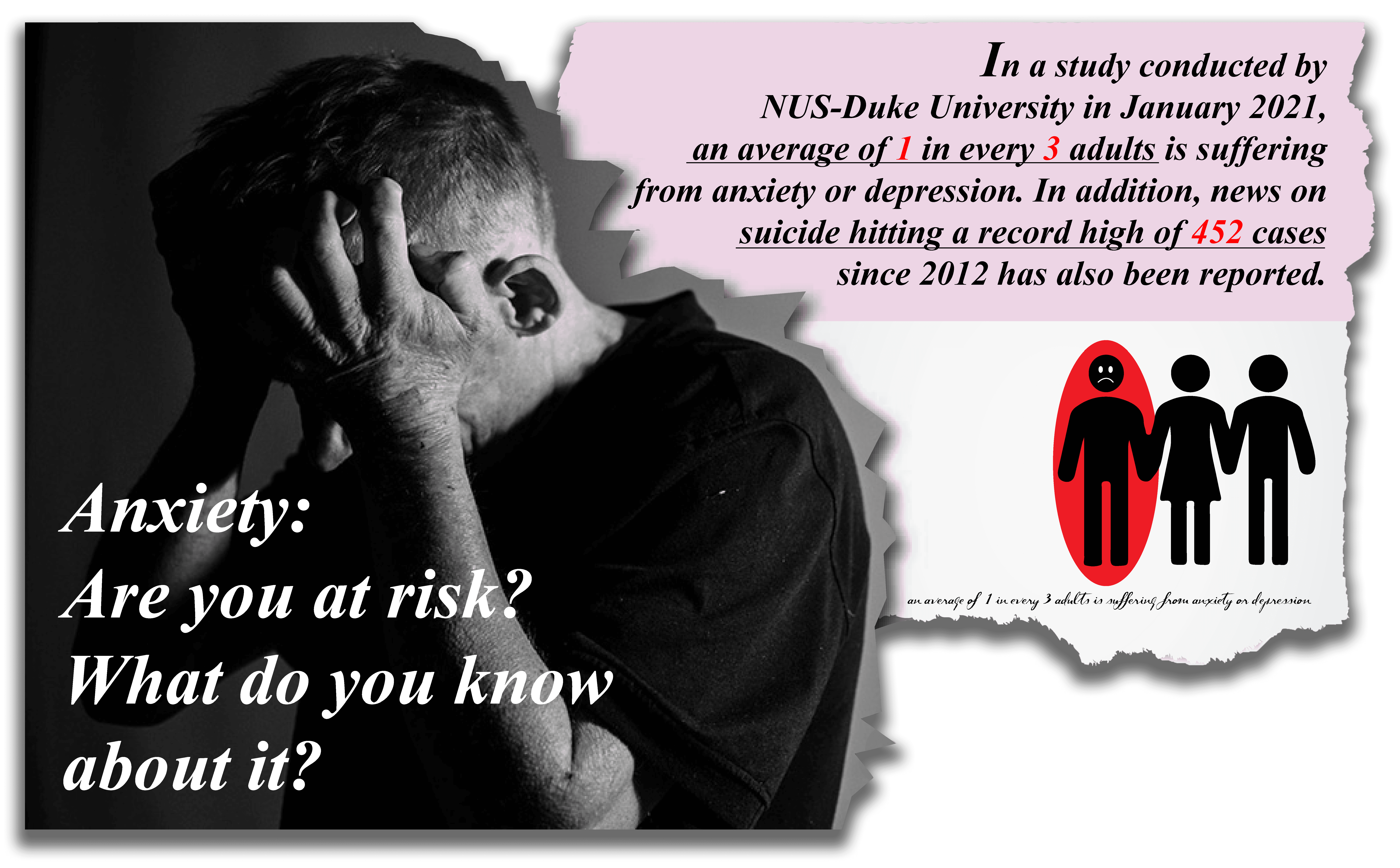
Anxiety: Are you at risk?

With the increased in daily stressors brought about by the ever-changing & fast paced world,
how can we navigate through the jungle of uncertainty – in life and towards the future – and
strike a balance within our inner psyche to maintain a healthy mental-wellbeing? The answer
is simple: Resilience.

Resilience, as defined by the American Psychologist, is the process of adapting well in the face
of trauma, threats, tragedy, adversity, challenges, or other significant sources of stress. Also
known as the “mental reservoir of strength” that we are able to call on in times of need,
resilience not only involves “bouncing back” from these difficult experiences, but it also
involves profound personal growth. In short, the higher the resilience of an individual, the
better they are in managing and rebuilding their lives.

Speaking about resilience is an easy task. Living it, on the other hand, requires knowledge and
constant practice. Are we tough enough in our resiliency to go through challenging times?
With more people contracting and suffering from psychological distress, how can we assess if
someone is experiencing a mental health breakdown? What exactly are the tell-tale signs? Are
we equipped with the knowledge and skills to be a pillar of support for those suffering from
depressive disorders? Join our 2-day Resilience Coach Certification course happening on the
13th – 14th December 2021 to find out!

Let’s work towards a healthy mental well-being that could open the doors of hope, opportunity,
and optimism in life through this research based, perspective-changing, and therefore life-altering
course!


Read More